
The Right Sitting Position for Drivers
Drive comfortably and you drive safely. The way you set up your seat before you pull away shapes how alert you feel, how well you concentrate and whether you climb down at the end of the day loose or aching. A few simple adjustments make a real difference.
Most of us settle into the seat we inherited from the last shift, nudge it forward until we can reach the pedals and get on with the job. It works well enough, so we never think about it again. Yet a seat that is a touch too low, a backrest sitting too upright or a wheel held at arm's length quietly loads your spine, shoulders and knees hour after hour. Over a long career that steady, low-level strain is exactly what turns into the back pain and joint trouble so many professional drivers live with.
The good news is that getting comfortable takes only a couple of minutes, and once you have found your set-up it becomes second nature. Here is how to sit well, run through in the order you would naturally work from the seat outwards, so a well-supported spine, relaxed shoulders and a clear view of the road come as standard rather than by luck.
At a glance
- Sit right back so the backrest, not your muscles, supports your spine.
- Set the seat height so your hips are level with or slightly above your knees.
- Recline the backrest to roughly 100 to 110 degrees for the natural curve of your spine.
- Keep shoulders relaxed and elbows slightly bent, hands at nine and three.
- Set the head restraint and seat belt correctly, then adjust your mirrors before you move off.
Comfort and safety are not separate goals here. A supported spine holds you upright without effort, which keeps you fresher and more alert. Relaxed shoulders let you steer smoothly and react quickly. A head restraint at the right height protects your neck if the worst happens. Set the vehicle up around your body and everything else gets a little easier.
Start with the seat
Everything begins with how you sit in the seat itself, so it is worth getting these three things right before you touch anything else.
Sit right back
Push your hips as far back into the seat as they will go, so your lower back is fully supported by the backrest rather than hovering off it. This one change does more for your back than any other. When the backrest carries the natural curve of your spine, the small stabilising muscles in your lower back can relax instead of straining to hold you up mile after mile, which is where a lot of end-of-day soreness comes from.
Set the height
Raise or lower the seat until your hips sit level with, or slightly higher than, your knees. You want a clear view of the road ahead with comfortable headroom, not so high that you are ducking and not so low that you are peering over the wheel. Getting the height right also takes pressure off the backs of your thighs, which helps your circulation on a long run.
Get the distance right
Slide the seat so you can press the pedals fully without stretching. Your knees should stay slightly bent even when the clutch or brake is pushed all the way down, and your thighs should feel supported along the seat base without any pressure building up behind your knees. If you are reaching with a pointed toe to find the pedals, you are too far back, and if your knees are jammed up you are too close.
A seat set up well does the hard work of holding you upright, so your body does not have to.
Backrest, wheel and hands
With the seat sorted, turn to the backrest and the steering wheel. These decide how your upper body, shoulders and arms sit through the whole shift.
Recline the backrest a touch
Aim for a backrest angle of roughly 100 to 110 degrees, so you are very slightly reclined rather than bolt upright. That gentle recline follows the natural curve of your spine and eases the load on your lower back, while still keeping the wheel and controls within easy reach. Sitting too upright feels alert but tires your back, and slumping too far back forces you to crane forward. A little reclined is the comfortable middle ground.
Position the steering wheel
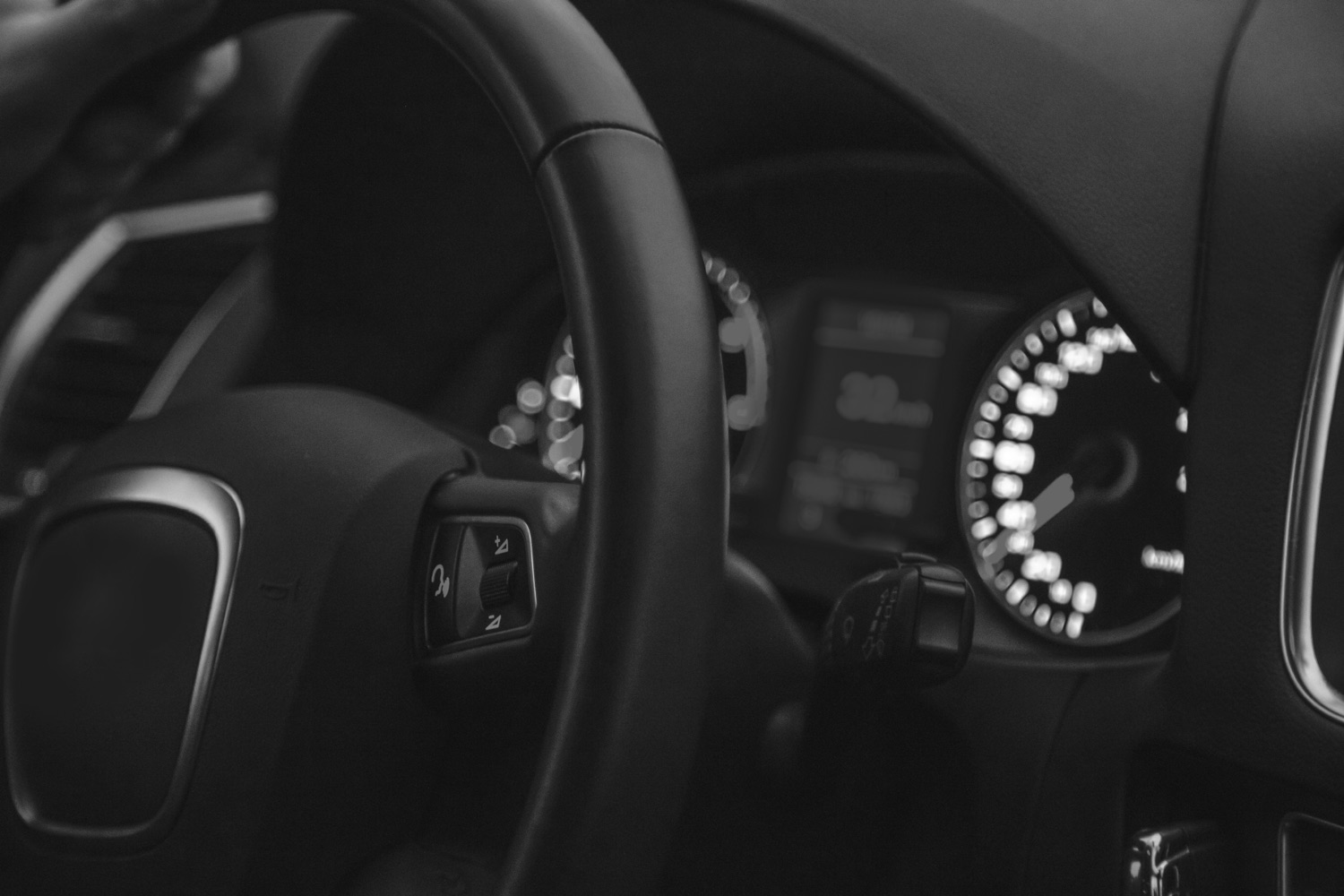
Set the wheel so your shoulders stay relaxed against the seat and your elbows are slightly bent, with your hands resting comfortably at the nine and three o'clock positions. The test is simple: you should be able to turn the wheel through a full movement without lifting your shoulders off the backrest. If you find yourself reaching or hunching to steer, bring the wheel closer or adjust its height until your arms fall naturally into place.
Head restraint and seat belt
These two take seconds to check and are as much about protecting you in a collision as they are about comfort, so it is worth making them a habit.
- Set the head restraint so its top is level with the top of your head, and bring it as close to the back of your head as is comfortable. Positioned well, it reduces the risk of whiplash if you are hit from behind.
- Wear the seat belt across the middle of your shoulder, crossing your chest and pelvis, never against your neck or across your stomach.
- Make sure the belt sits snug against your body with no twists in the webbing, so it can do its job properly.
Set your mirrors last
Once you are sitting correctly, adjust your mirrors, and always do this before you set off rather than on the move. Because you are now in your proper driving position, the mirrors will be set for how you actually sit, which is the whole point. Good mirror positioning keeps your blind spots as small as possible and means you can check around the vehicle with your eyes rather than twisting your neck and torso, which protects your back and neck across a long day of manoeuvres and junctions.
If you adjust your mirrors while slumped or perched forward and then settle back properly, everything will be slightly out. Sit right first, then set the mirrors to match. It is a small order-of-operations habit that saves a surprising amount of neck strain.
Stay comfortable on the long haul
Even the best sitting position is still a static one, and the human body is not built to hold any single posture for hours on end. No seat set-up, however good, replaces simply moving. On a long journey the seat gets you started well, but regular breaks are what carry you through comfortable to the end.
Whenever you stop, get out of the vehicle, stretch out your back, shoulders and legs, and walk around for a few minutes to shift your circulation and loosen everything off. A short routine of gentle stretches at each break does far more for your joints than pushing on ever will, and it keeps you sharper for the driving too. If you would like some simple movements built for the roadside and a wider plan for protecting your back and joints over a career at the wheel, our musculoskeletal and joint health programme is put together specifically for life on the road.
Sitting well is one of those quiet habits that costs you almost nothing today and pays you back every year you keep driving. Set the seat up around your body, check the restraint, belt and mirrors, and give yourself proper breaks. Do that consistently and you give your spine, shoulders and knees the best possible chance of staying comfortable for the long haul.
Frequently asked questions
How should I set up my seat before driving?
Push your hips right back so the backrest fully supports your lower spine, then set the height so your hips are level with or slightly above your knees. Slide the seat so you can press the pedals fully with your knees still slightly bent. Set the head restraint, seat belt and mirrors last, once you are sitting properly.
What is the ideal backrest angle for driving?
Aim for roughly 100 to 110 degrees, so you are very slightly reclined rather than bolt upright. That gentle angle follows the natural curve of your spine and eases the load on your lower back while keeping the wheel and controls within easy reach. Sitting too upright tires your back, and slumping forces you to crane forward.
Where should my hands be on the steering wheel?
Rest your hands at the nine and three o'clock positions with your shoulders relaxed against the seat and your elbows slightly bent. You should be able to turn the wheel through a full movement without lifting your shoulders off the backrest. If you are reaching or hunching to steer, bring the wheel closer or adjust its height.
How should the head restraint be positioned?
Set the top of the head restraint level with the top of your head and bring it as close to the back of your head as is comfortable. Positioned well, it lowers the risk of whiplash if you are hit from behind. It takes only seconds to check, so it is worth making a habit.
Can a good sitting position stop back pain while driving?
A seat set up well takes a lot of strain off your spine, shoulders and knees, which helps prevent the low-level aches that build over a long career. It is not a complete fix on its own, though, because any single posture held for hours is tiring. Pair good posture with regular breaks and gentle stretching to protect your back.
Should I adjust my mirrors before or after setting my seat?
Always set your mirrors last, once you are sitting correctly, and do it before you move off rather than on the move. If you adjust them while slumped or perched forward and then settle back, everything will be slightly out. Sitting right first means the mirrors match how you actually sit, so you can check around the vehicle with less neck twisting.
Take the next step
Look after your back for the long haul
Our musculoskeletal and joint health programme covers posture, movement and recovery as part of a wider approach to staying well behind the wheel, for individual drivers and whole fleets.